PEER-REVIEWED PUBLICATIONS
“E-Government Use, Perceived Transparency, Public Knowledge of Government Performance, and Satisfaction with Government: An Analysis of Mediating, Moderating, and Framing Mechanisms Based on the COVID-19 Outbreak Control Survey Data from China.” (Corresponding Author, with Edward Gu, Tianguang Meng, and Hongying Wang). 2023. Social Indicators Research. 169: 79-124.
Abstract
According to the existing literature on public management, many factors affect popular satisfaction with the government (referred to as “government satisfaction”), one of which is the use of e-government. Particularly, many e-government proponents regard increasing government transparency as an important way to improve government satisfaction. To test the validity of this assertion, this paper uses an Ordinary Least Squares (OLS) regression model to analyze survey data on individuals’ e-government usage frequencies in China and their satisfaction with the local government during the COVID-19 pandemic. We find that people can rationally and consciously evaluate governments and make decisions by using the government performance information that they know about. This conscious and rational process is also mixed with the impact of some irrational and emotional factors, which is consistent with the concept of the “framing effect.” This paper identifies local government transparency as the mediating variable in the relationship between the use of e-government and government satisfaction and public knowledge of local government performance in COVID-19 outbreak control as the moderating variable in the relationship between local government transparency and government satisfaction. Since the mediating effect of local government transparency is significantly different from those of overall and central government transparency, government transparency at different levels plays a role of the above-mentioned “frame.”

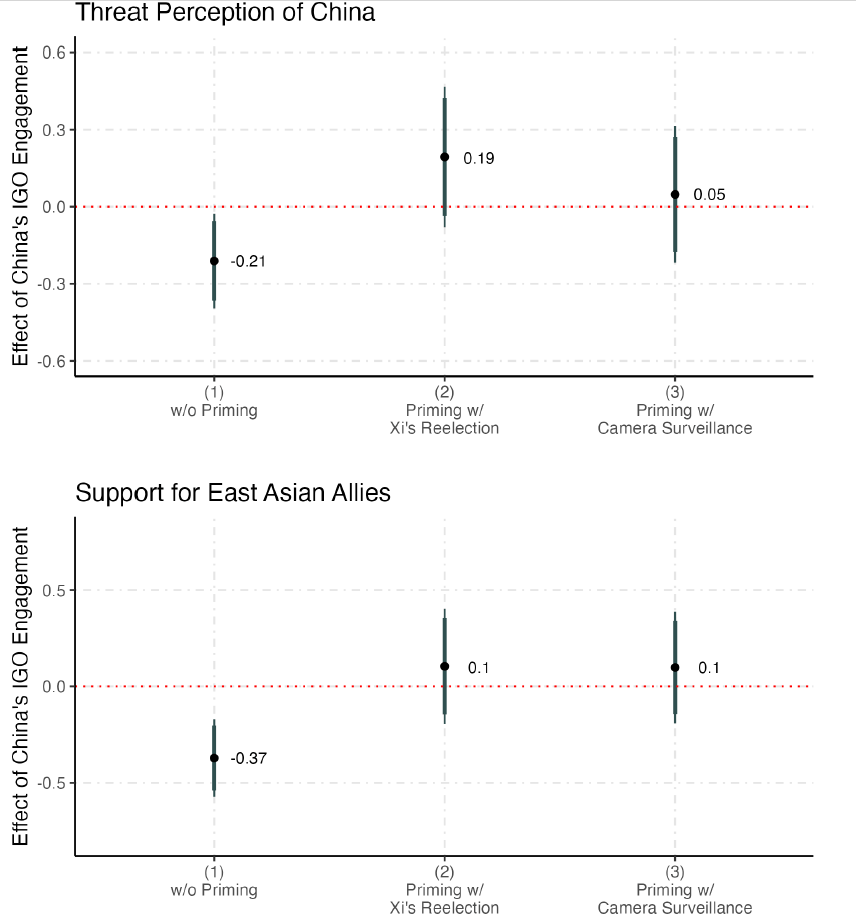
“How China’s Multilateral Engagement Shapes Threat Perception Amid Rising Authoritarianism?” (with Jungmin Han and Xin Han). Journal of Contemporary China, forthcoming. Presented at the 2022 Fudan-UC Young Scholars Conference, the 2023 International Security Seminar, the 2023 Pitt-Penn IR Workshop, the 2023 Annual MPSA Conference, and the 2024 ISA Annual Convention.
Abstract
Despite increased contributions to key UN-affiliated intergovernmental organizations (IGOs) under Xi Jinping, American skepticism about its motives in global affairs persists. This paper examines this puzzle by exploring how China’s authoritarian image interacts with its multilateral engagement to shape public opinion. We argue that when China’s authoritarianism is primed, its IGO participation is perceived not as integration, but as a strategic effort to undermine the Liberal International Order, thus reinforcing its threat perceptions. Evidence from an original survey experiment supports this claim: American respondents exposed only to a report about China’s IGO contributions viewed it as less threatening, but this effect disappears when paired with a video clip on China’s authoritarianism. This finding provides insights into the microfoundation of the recently escalating US-China rivalry.
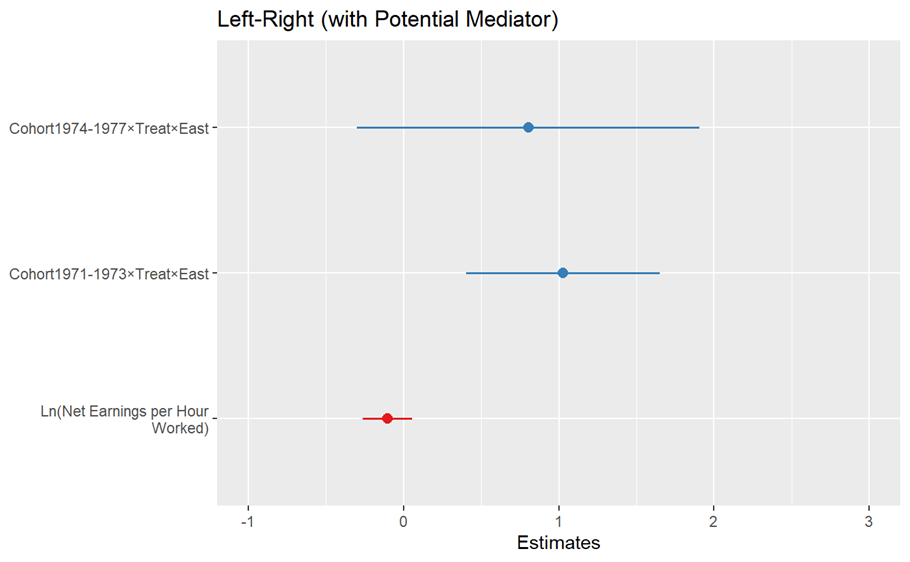
“How Does Schooling under Communism Influence Political Attitudes during the Years of Transition to Democracy? A Difference-in-Differences Analysis Based on a Natural Experiment.” Journal of Comparative Economics, forthcoming.
Abstract
The study investigates how schooling in the Socialist regime of the German Democratic Republic (GDR) affected the long-term economic conditions and political orientations of people, especially when the country decided to transform the system that was being used after the German reunification. Although the nature of education has been recognised in previous studies as an element that affects the promotion of lasting beliefs, its effects when it comes to autocratic regimes have remained ambiguous. This paper exploits this natural experiment and conducts the analysis based on exclusively compiled individual-level data on education, labour market outcomes, and political preferences by means of a difference-in-difference-in-differences (DDD) experimental design. The analysis reveals that GDR schooling had no substantial influence on the ultimate educational attainment in comparison to the West, but demonstrated long-term adverse effects on the performance in the labour market, specifically, on an hourly wage. Against these expectations, Socialist education made citizens more responsible in their behaviour in economics. Rather, early schooling in the form of political indoctrination is found to relate to later becoming politically leftward in outlook. The conclusions of this study help to comprehend the lasting economic and ideological legacy of authoritarian education systems and include quite significant implications for the design of education and labour market reforms in post-authoritarian societies.
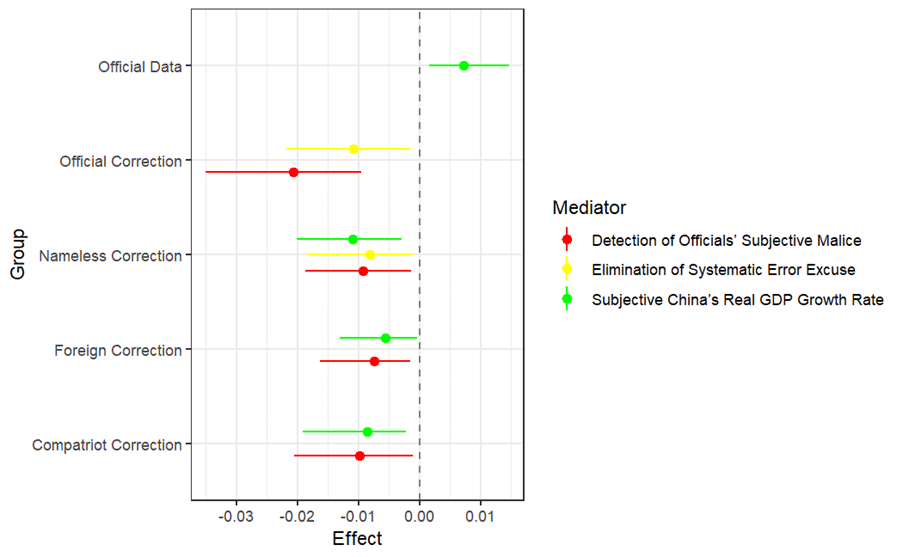
“Government Data Falsification, Correction, and Political Trust: Experimental Evidence from an Authoritarian Regime.” Government Information Quarterly (2024 Impact Factor: 10.0), forthcoming. Presented at the 2023 APSA Annual Meeting.
Abstract
Both democratic and authoritarian regimes have faced scandals involving manipulated crime, economic, and public health statistics, but this problem is particularly noticeable under the latter. How do government data falsification and its correction influence citizens’ attitudes toward the government? This study addresses the issue by proposing a theoretical framework and exploiting an online survey experiment in an authoritarian country, China. The results show that official economic data can boost individuals’ subjectively perceived economic performance of the government, but this perception does not translate into greater trust in it. Once there is corrective information pointing out that such data may be inflated, people’s political trust is seriously eroded. Source credibility and deception detection sequentially mediate the effect of correction. Self-correction is most persuasive among all corrections due to either the elite cue or in-group effect. It more often lets people attribute the inflated official data to the officials’ malice than helps them attribute the inflated official data to causes beyond the officials’ malice during the deception-detection process. Liberalism positively influences the treatment effect of correction with in-group mass cues on beliefs in corrective information. The magnitude of the negative impact of detecting official data falsification on trust in the government rises with people’s preexisting beliefs about official data. These findings mirror real-world political dynamics that regimes must balance the short-term benefits of data manipulation against long-term risks to public trust and enrich the literature on the determinants of misperception correction and political trust that are significant to scholars and policymakers.
UNDER REVIEW
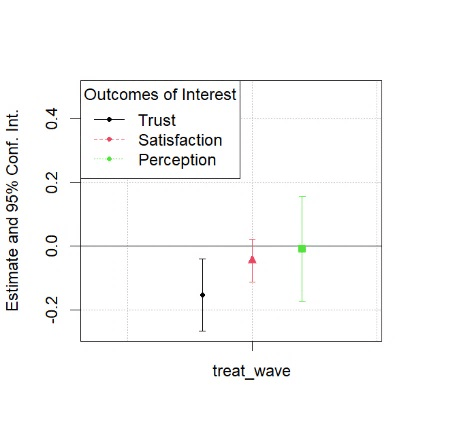
“Can Government’s Self-Correction of Data Falsification Salvage Public Opinion about It? Observational Evidence Based on Two Chinese Cases.”
Abstract
How does Chinese public opinion respond to their government’s correction of official data previously falsified by itself? In this report, I provide answers to the above question by exploiting a difference-in-differences strategy and natural language processing technology based on a national panel survey and two large-scale self-confessions in China. I find that once there is official corrective information merely and bluntly pointing out that such data are inflated, people’s political trust is seriously eroded. When the core content of self-correction downplays the nasty nature of government fraud and highlights the government’s commitment to rectification of this problem, people’s satisfaction with the government rises. These empirical outcomes may enrich the literature on the relationship between disinformation campaigns and public opinion that are significant to scholars and policymakers.
“Tug of War between Different Elements of Personality Shaped by Schooling under Communism over Vote Choice.”
Abstract
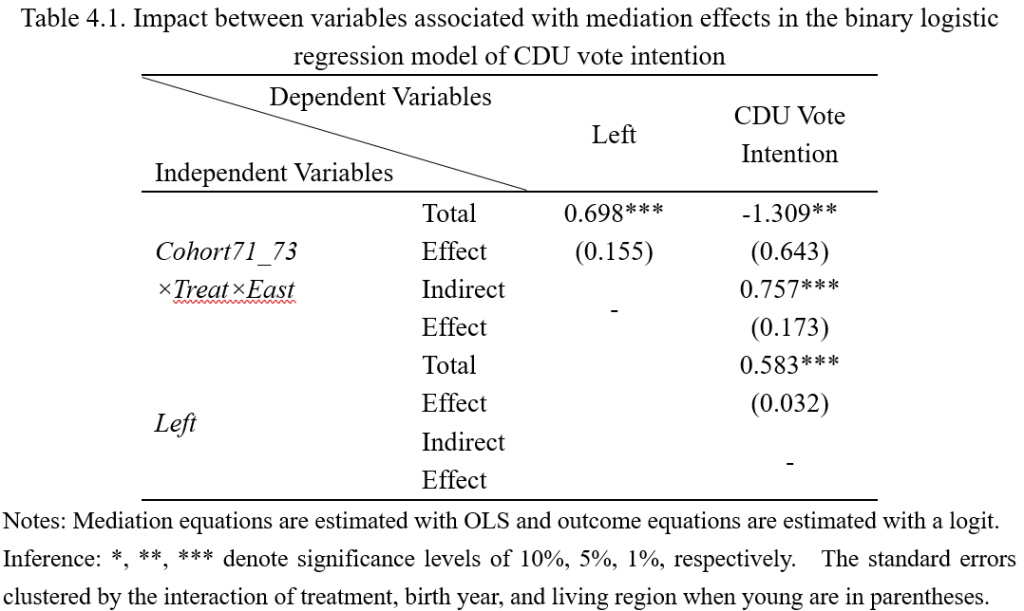
Little research on individual-level and historical determinants of support for different candidates and parties has adopted the “Socialist personality” shaped by the education system under Communist regimes as an explanatory variable. To fill this niche, I argue that schooling under Communism engenders a tendency of voting behavior even during the years of democracy and that this reaction is mediated through certain beliefs and preferences reflecting the above Socialist personality traits. This paper exploits the difference-in-differences as well as natural experiment approaches and causal mediation analysis to examine individual-level data from four waves of the German General Social Survey (GSS)-ALLBUS (2008, 2010, 2014, and 2018) and regional immigrant and economic data for Germany, thereby demonstrating how educational experiences decades ago influence recent support for parties in Germany. Socialist elements in syllabus and pedagogy under Communism make individuals less in tune with materialism, thereby driving them to intend to vote for the Left Party, which is the direct descendant of the Socialist Unity Party (SED) that ruled the GDR for decades but more post-materialist than its main competitors like Alternative for Germany (AfD). Meanwhile, enrollment with political restrictions in the Socialist education system tends to exert a pro-leftist effect on people and thus bring about a decrease in the intention of voting for the right-wing Christian Democratic/Christian Social Union (CDU/CSU) and AfD. My findings have significant implications for us to understand the relationship between individual-level as well as historical factors and vote choice.
CONFERENCE PAPERS
“From ‘Kingly Way’ and ‘Hegemonic Way’ to ‘Tai Chi’ or ‘Civil War’? Cultural Origins and Prospects of Rhetoric in the Chinese Government’s Propaganda Overseas.” Presented at the Texas Methods Meeting 2024, the Pitt Grad Expo 2024, the 2024 Annual MPSA Conference, the 2024 MapleMeth Conference, the 2024 Annual AAPOR Conference, the 2024 Annual Meeting of the Society for PolMeth, Summer School on “Democratic Decline and Resilience,” and the 2024 APSA Annual Meeting.
Abstract
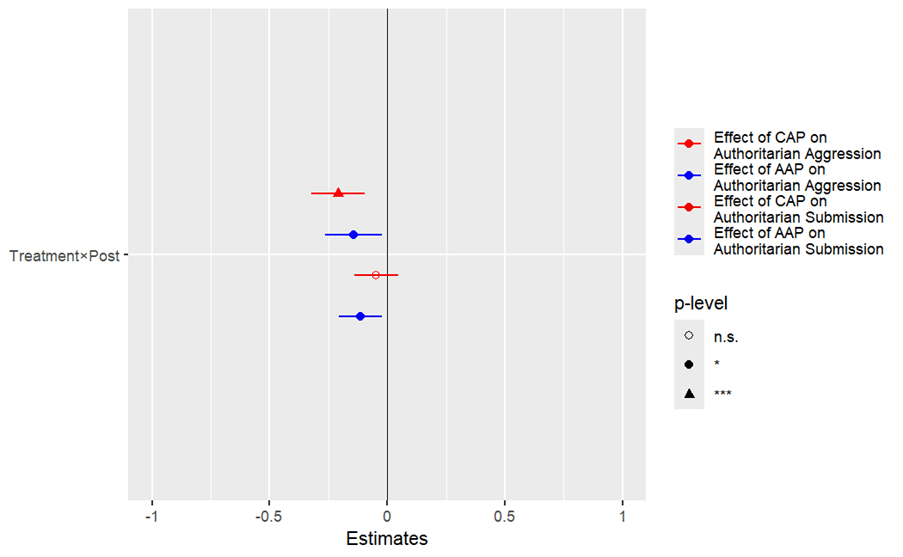
Where are the cultural roots of rhetoric in the Chinese regime’s external propaganda? How does the ideologically polarized nature of its audience influence its effectiveness? This project attempts to answer these questions by proposing a theoretical framework in which the above rhetoric extends from the traditional Chinese political thoughts of the “kingly way” and “hegemonic way,” while left-wing and right-wing foreigners are becoming its main recipients. It predicts that the shared logic behind their lines of reasoning, that is, prioritized moral foundations of care and fairness drives the propaganda messages from China in a “kingly way” and those from the leftists to be similar in their texts and effects, and the effect of the former on views of China is larger among leftists than rightists. Meanwhile, the texts and effects of propaganda from China in a “hegemonic way” and the right-wing foreigners are similar, and the effect of the former on being more authoritarian, pro-China, or deterred is larger among rightists than leftists because of their shared preference for moral foundations of loyalty, authority, and sanctity. The effects of China’s external propaganda in a “kingly way” and a “hegemonic way” on the same ideological group counteract each other. Natural language processing technology was adopted to compare propaganda Tweets, and a survey experiment was conducted in the US. The findings provide some evidence for the hypotheses, but China’s propaganda in a “kingly way” and a “hegemonic way” can sometimes reinforce each other.
“Price for ‘Saying One Thing Abroad but Another at Home’ in a Politically Polarized Context.” Presented at the 2025 Annual Meeting of the Society for PolMeth and the 2025 APSA Annual Meeting.
Abstract
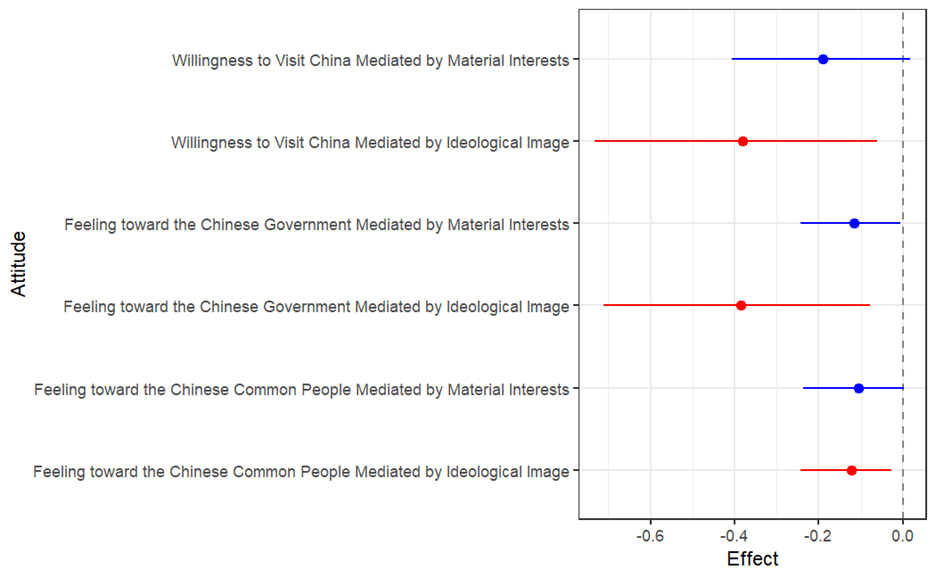
Public opinion can influence foreign policy decision-making, so it is important to evaluate the effect of the spillover of domestic propaganda in closed societies to foreign audiences. I exploited the dictionary-based text analysis and conducted survey experiments in the US to test how exposure to the Chinese government’s foreign-facing propaganda Tweets and their counterarguments from the “Great Translation Movement” influence individuals’ authoritarian values and attitudes toward China. My findings demonstrate that simultaneous exposure reduces authoritarianism and pro-China sentiment. China’s propaganda based on care and fairness moral foundations and the counterarguments mainly worsen attitudes toward its public, whereas propaganda grounded in loyalty, authority, and sanctity and the counterarguments deteriorate attitudes toward its government. Moral reasoning reduces the effects of counterarguments for propaganda in line with rightists’ prioritized moral foundations. China’s ideological in-group image and the conflicting material interests between it and Americans mediate the effects of its propaganda and the counterarguments on Americans’ opinions.
“The Reincarnated Cultural Shock: Uncovering an Unexpected Authoritarian Cultural Origin in the United States.” (with Xin Han). Presented at the 2024 APSA Virtual Research Meeting, the 2024 Annual MPSA Conference, and the 2024 Annual AAPOR Conference.
Abstract
How does the consumption of foreign cultural products affect political predispositions? The recent surge in populist authoritarianism across democracies has prompted extensive research. Economic insecurity and a counter-reaction against progressive cultural shifts are identified as its driving forces. While economic insecurity due to imports in manufacturing industries from East Asia has received significant attention, East Asian cultural products that may foster cultural concerns and bolster support for authoritarianism remain understudied. This study introduces the concept of the “reincarnated cultural shock” to depict how values prized by authoritarian regimes can be reincarnated into cultural products originating from democracies like Japan, which subsequently shape the authoritarian values of citizens in other democracies, most notably the United States. Drawing upon established theories of preadult socialization and cultural backlash, we examine the intricate interplay between a “reincarnated cultural product,” the age at which individuals consume it, and the encouragement or discouragement of emulating characters within that product, which may influence the adoption of authoritarian values among the consumers. To empirically test our hypothesis, we employ a survey experiment and semi-structured interviews conducted among US citizens. Our research endeavors to provide evidence regarding the role of “reincarnated cultural shocks” in shaping political attitudes and shed new light on an intriguing aspect of contemporary political dynamics.
“Toward a Generalized Game of Disinformation, Correction, and Propaganda with Incomplete Information and Third-Party Threats.” Presented at the 2024 Behavioral Models of Politics Conference, the 2024 EITM-OSLO, the 2024 APSA Political Psychology Pre-Conference, and the 2025 Annual MPSA Conference.
Abstract
It is difficult to directly observe how decisions related to disinformation are made at all levels of government, especially in non-democratic countries like China, so the existing observational and survey experimental research on government disinformation policies and their impacts can be conducted only with the general public, which leaves some unanswered questions about officials’ choice of specific actions associated with disinformation: When is the government going to falsify the data on its performance? How will the government respond to public doubt on its official data? What role do certain ideologies play in the government’s pertinent decision-making process? This study first develops a game-theoretic model that systematically captures both the historical features and latest trends of the above politicians’ intentional deception and follow-up measures by letting a politician, a citizen, and a third party play a game. These equilibria of my model to some extent reflect the conditions that entice the politician to falsify the data on his or her performance or not, the public to accept or doubt that official data, the politician to respond by launching propaganda or correcting the official data by himself or herself, and the third party to correct that official data or not. To empirically test some key predictions of the above model, I conduct a laboratory experiment. This research endeavors to enrich the literature on officials’ choices about different actions connected to disinformation given the third-party threat and the associated shifts in public opinion.

“Crisis Management and Country Image: Application of Aspect-Based Sentiment Measurement with Few-Shot Learning Technique in Analyzing the Case of Peng Shuai’s Disappearance.” Presented at the 2023 SICSS-Penn and the 2025 Annual MPSA Conference.
Abstract
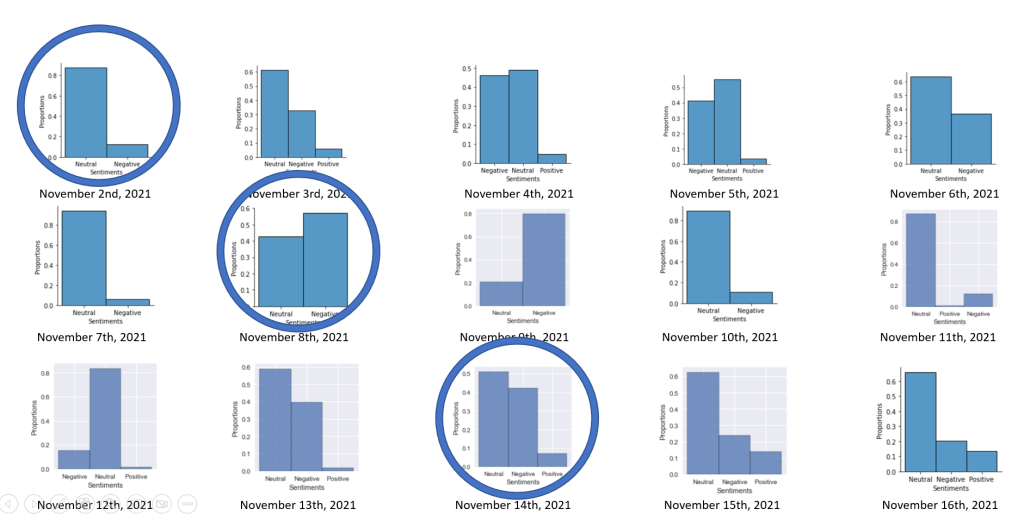
Crisis management consists of a set of abilities that evaluate crisis signals and take actions to mitigate damage. On the other hand, the image of a country has a profound impact on economic development and international relations. In dealing with some international events, the governments of different countries and their people showed different reactions, leading to different perceptions of their images by international general public. In this project, I take China as a specific and typical case and study its image using sentiment analysis and aspect-based sentiment analysis on a large-scale Twitter dataset. To conduct the research, I first create a Twitter dataset. Then, I apply stanza to sentiment analysis and aspect-based sentiment analysis and thus examine the image of China. I find the almost daily change in sentiments between neutral and negative among the public. I explain this pattern of change by referring to the timeline of all the significant events related to a Chinese tennis star’s strange disappearance.
“A Multi-Agent System for Negotiation Simulation with Large Language Models and the Russia-Ukraine Case” (with David Liao). Presented at the 2025 APSA Annual Meeting and Will Be Presented at the 2026 SPSA Annual Conference-Conference Within a Conference.
Abstract
We integrate a game-theoretic model into a multi-level negotiation simulation system prototype that utilizes Large Language Models as AI agents to simulate complex international negotiations. To test our analytical framework, we are using the ongoing Russia-Ukraine ceasefire negotiations as a case study and constructing an interaction model with teams from three parties: the US, Russia, and Ukraine. Our implementation is based on LangGraph and AutoGen for multi-agent system development. The AI agents’ personas are designed to emulate the above three parties’ political elites. The objective conditions of the three countries, like economic capacity and military prowess, are also in our simulation. We first adopt the negotiation simulation to predict the specific terms of the Russia-Ukraine ceasefire deal and will use its actual terms to calibrate our simulation.
WORKING PAPERS
“Why Is the Effectiveness of the ‘Double Reduction’ Policy Likely to Be Discounted? Preliminary Study from a Demand-Side Perspective.” (with Edward Gu).
Abstract
Existing literature on shadow education has identified the reasons for its popularity, its pros and cons, and the necessity of its regulation. Nonetheless, the government’s, be the democratic or the autocratic one, attempts to curb such kind of education almost always fail, the explanations for which in Comparative Politics are not enough. To delve further into the causes of such a phenomenon, this design first develops a game-theoretical model of collective action that involves shadow education, where a low level of social capital tends to impede horizontal information flows across citizens, and thus citizens cannot know others’ private individual preferences determined by institutional and cultural factors. The absence of such information may render the Chinese government’s “double reduction” policy in 2021 that cracks down on shadow education programs less effective. Subsequently, the predictions of the above formal model are empirically tested on the basis of data from China.
“Citizens’ Government Preference and Corruption Tolerance: Transnational Analysis of Political Cultures.” (with Zhe Wang and Edward Gu).
Abstract
The study of corruption tolerance is a frontier topic in the field of political psychology and political culture research in recent years. Based on the pooled cross-sectional data of the World Values Survey, this paper examines the relationship between the citizens’ government preference and their corruption tolerance using a more scientific entropy balancing method. This paper divides the public’s preference for the government into the government function preference and the strong leader preference, and finds that these two kinds of preference is opposite to each other as for the relationship with the people’s corruption tolerance. The wider the citizens’ functional preference of government, or the more people prefer the big government, the lower the corruption tolerance; the stronger the citizens’ strong leader preference, the higher the corruption tolerance. This study not only enriches the results of the research on corruption tolerance, but also fills the gaps in the field of political cultures, and also provides a political psychological explanation for corruption forgiveness in voting theory.

“Incentives in the Management of the Public Sector: Multi-Tasking Principal-Agent and Game-Theoretic Perspectives.” (with Edward Gu).
Abstract
All organizations within the public sector have multitasking objectives, and therefore multitasking principal-agent relationships exist between managers and employees of these organizations. Generally speaking, the tasks that managers need employees to accomplish can be divided into two main categories: tasks with high performance measurability and tasks with low performance measurability. At the same time, the compensation systems for employees in the public sector can basically be categorized into four types: fixed-salary system, piece-rate system, sharecropping system, and rental system. This paper demonstrates from a game-theoretic perspective that under a fixed-pay system, employees, when faced with a multitasking situation, choose to put the least amount of effort into each task, and the optimal coping strategy for public sector managers is to offer the lowest fixed wage, and their decisions result in the overall performance of the department being stuck at the lowest level. Piece-rate contracts provide strong incentives for tasks with high performance measurability, so it is possible to achieve higher outputs where the differences in performance measurability across tasks have been reduced by modern information and communication technologies, but the overall effectiveness of the department cannot be maximized. Sharecropping systems and rent systems, which provide strong incentives for both types of tasks, can be more effective in motivating employees to work hard and maximizing total departmental effectiveness. However, the sharecropping system maximizes total departmental performance only under certain conditions, and its application involves “credible commitment” due to the low measurability of total public sector performance. On the other hand, the rental system is not suitable for all public sectors because of its characteristic of requiring employees to realize a more substantial financial income. Moreover, both incentives have the potential to generate negative externalities for society as a whole. Therefore, it is not possible to optimize the benefits of the public sector simply by selecting an internal management system for it (specifically, a remuneration system).
“Incentives in the Management of Public Hospitals: Multi-Tasking Principal-Agent and Game-Theoretic Perspectives.” (with Edward Gu).
Abstract
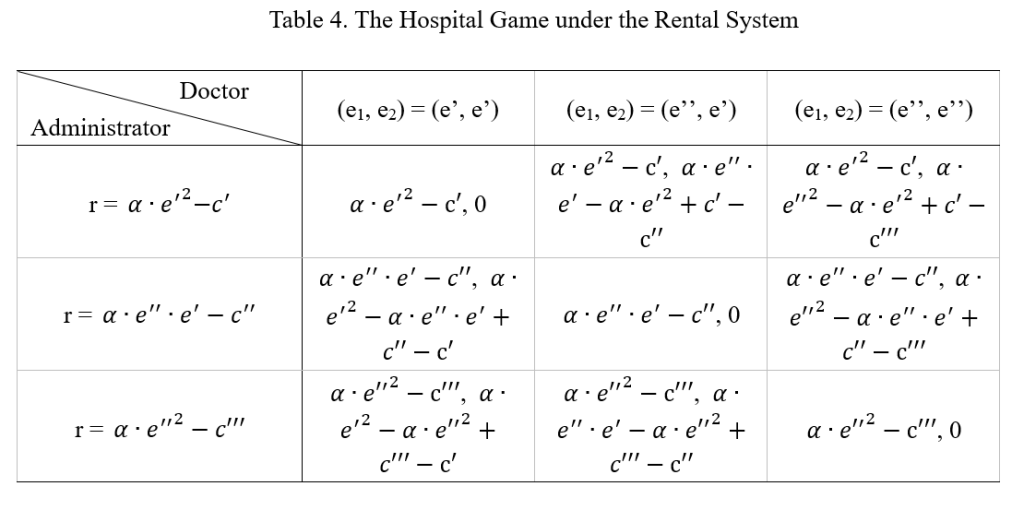
In public hospitals, there is a multi-task principal-agent relationship between hospital administrators and doctors. Administrators need doctors to complete two types of tasks: economic and public welfare tasks. The salary system set up by the hospital for doctors can be basically divided into four categories: fixed-salary system, piece-rate system, sharecropping system, and rental system (commonly referred to as “department contracting” in China). This paper proves that under the fixed-salary system, when a doctor is faced with multi-tasking, the doctor should select the smallest effort on each of the tasks whilst the hospital administrator’s optimal response is to offer the minimum wage, leading to the lowest level of the overall social surplus. The piece-rate contract provides strong incentives for the verifiable task, and thus there is a possibility of the higher level of output. The sharecropping system and rental system with strong incentives for both tasks is more effective in motivating doctors to work harder. If the method of payment is mainly fee-for-service, then these two incentive mechanisms will promote overtreatment among doctors, which will generate negative externalities for the whole society, and is not conducive to the achievement of public hospitals’ public welfare tasks. Therefore, it is impossible to optimize the reform of public hospitals merely through improving the internal management of the hospital. To find another way to rebuild the relationship among public hospitals and the government and payers (medical insurance institutions) is more feasible.
SELECTED WORKS IN PROGRESS
“How Did Elites’ Speeches Respond to Each Faction of the Red Guards under Mao’s China? An Exploration Based on the Ideal Point Estimation of Text Data.” (with David Liao and Sanghoon Silvestre Park).
“Where the King Goes: Elite Cues, Institutional Legitimacy, and the Migration of Football Talent.” (with Jing Li).
“Sympathy Capital and Authoritarianism: Assessing the Impact of China’s Panda-Diplomacy-Style Digital Soft-Power Initiative Propaganda.”
 Alexander ZHANG